One Product.
Complete CIWA Coverage.
Rebound Vitamins replaces Thiamine, Magnesium, and multivitamins in alcohol withdrawal protocols — consolidating four standard supplementation orders into a single, clinically complete product designed for CIWA-Ar care.
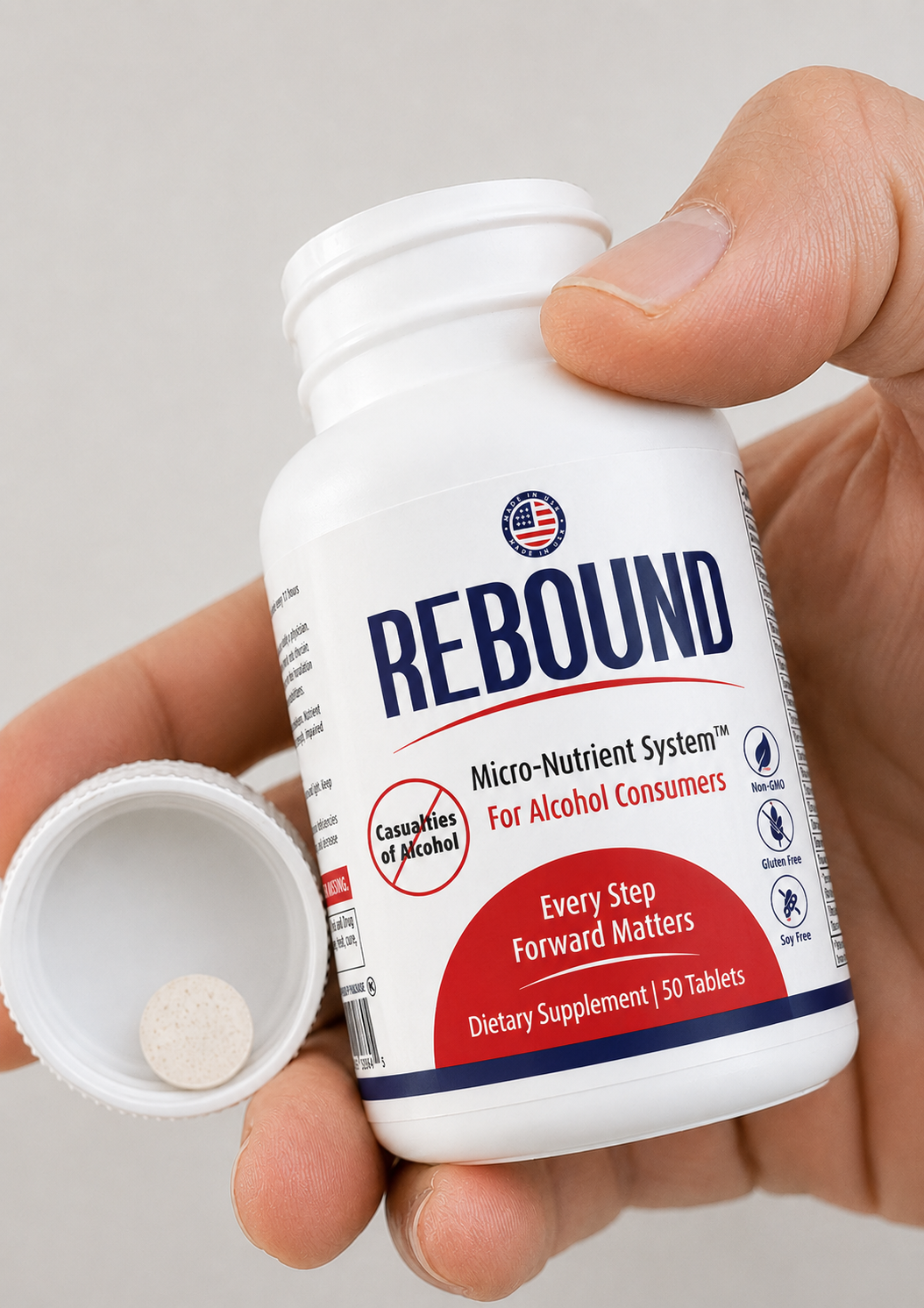
Why Each Ingredient Is Included
Every component of Rebound Vitamins addresses a documented nutritional deficiency common in patients with alcohol use disorder undergoing CIWA-Ar monitored withdrawal.
Thiamine (Vitamin B1) — 100mg
Thiamine deficiency is present in up to 80% of patients with alcohol use disorder. Rebound provides 100mg per tablet — the standard prophylactic dose — to prevent Wernicke's encephalopathy during withdrawal.
1 Thomson AD et al. Alcohol Alcohol. 2002;37(6):513–521.
Folate (Vitamin B9) — 0.4mg
Chronic alcohol use impairs folate absorption and increases urinary excretion. Folate deficiency contributes to macrocytic anemia and neurological dysfunction. Rebound provides 0.4mg per tablet for daily repletion.
2 Halsted CH et al. Alcohol. 2002;27(3):169–172.
Magnesium
Hypomagnesemia is common in alcohol withdrawal and lowers the seizure threshold. Oral magnesium supplementation supports benzodiazepine efficacy and reduces neuromuscular excitability throughout the withdrawal period.
3 Elisaf M et al. J Trace Elem Med Biol. 1995;9(4):210–214.
Full B-Complex + Vitamins C, D, E, Zinc
Patients with alcohol use disorder are broadly malnourished. Rebound includes a complete micronutrient profile to address the full spectrum of nutritional deficiencies common in this population — not just the three protocol-required supplements.
4 Leevy CM, Baker H. Am J Clin Nutr. 1968;21(11):1325–1328.
How to Integrate Rebound Into Your Protocol
Rebound Vitamins is designed to slot directly into the UCSF symptom-triggered CIWA-Ar protocol. Follow these four steps from admission through the 6-week recovery period.
Symptom-triggered protocol reference: Saitz R et al. JAMA. 1994;272(7):519–523.6 Daeppen JB et al. Arch Intern Med. 2002;162(10):1117–1121.7
Initiate at Admission
Order Rebound Vitamins 1 tablet PO twice daily at admission, as soon as the patient is tolerating oral intake. This replaces the Thiamine, Folic Acid, and oral Magnesium orders from your standard CIWA supplementation set.
If PO not tolerated or Wernicke's encephalopathy suspected: give IV Thiamine 500 mg TID × 3 days (Pabrinex or equivalent) before any glucose-containing fluids. Do NOT use 100 mg IV — this dose is insufficient for treatment of suspected Wernicke's encephalopathy (Thomson et al., 2002; EFNS Guidelines, 2010).
Continue BID Through Day 5
Maintain 1 tablet twice daily throughout the active withdrawal period (Days 1–5). This aligns with the UCSF symptom-triggered protocol monitoring window and the period of highest nutritional demand.
Continue alongside lorazepam dosing per CIWA-Ar score. Rebound does not interact with benzodiazepines.
Transition to Once Daily — Day 6
Beginning Day 6, reduce to 1 tablet once daily. Continue for 6 weeks to support ongoing nutritional recovery, liver function restoration, and neurological repair during early sobriety.
Coordinate with outpatient follow-up. Rebound can be prescribed at discharge for the maintenance phase.
Discharge & Outpatient Continuation
Prescribe or recommend Rebound Vitamins at discharge for the 6-week maintenance period. Coordinate with addiction medicine, primary care, or outpatient follow-up to ensure continuity of nutritional support.
Patients can order directly at reboundvitamins.com or through their outpatient provider.
Prescribing Summary
All patients undergoing CIWA-Ar monitored alcohol withdrawal who are tolerating oral intake.
1 tablet twice daily (BID)
With water or food. Initiate at admission.
1 tablet once daily
Continue through full 6-week recovery period.
Standard Orders vs. Rebound Vitamins
Rebound consolidates four standard CIWA supplementation orders into a single product — without removing any clinically required component.
Fewer Orders
Reduce medication reconciliation burden and order entry errors with a single supplementation product.
No Gaps in Coverage
All four standard CIWA supplementation components are present — nothing is omitted or reduced.
Better Patient Adherence
One tablet twice daily is simpler for patients to follow than four separate supplements — especially during active withdrawal.
12 Signs of High-Functioning Alcoholism
High-functioning alcohol use disorder is frequently missed in clinical settings because patients maintain professional and social performance. These 12 signs help clinicians identify patients who may be underreporting or unaware of the severity of their dependence.
High-functioning AUD patients often present without obvious social consequences, making AUDIT-C and CAGE screening tools essential adjuncts to clinical observation.9,10 Nutritional deficiencies (Thiamine, Folate, Magnesium) accumulate silently in this population before acute withdrawal occurs.1,2,3
Drinks to Relax or Cope
Uses alcohol consistently to manage stress, anxiety, or emotional discomfort. May describe drinking as "necessary" to unwind — a hallmark of psychological dependence.
Maintains High Functioning at Work
Holds a professional job, meets deadlines, and appears high-performing. Colleagues rarely suspect a problem — making clinical identification significantly harder.
Denies or Minimizes Consumption
Consistently underreports quantity and frequency. May rationalize by comparing to peers ("I drink less than my coworkers") or citing professional success as evidence of no problem.
Drinks Alone or in Secret
Conceals drinking from family, friends, or colleagues. May keep alcohol in the car, office, or hidden at home to avoid scrutiny.
Blackouts Without Apparent Intoxication
Experiences memory gaps during drinking episodes but does not appear visibly drunk. High tolerance masks severity from observers — and from the patient themselves.
Increased Tolerance Over Time
Requires progressively more alcohol to achieve the same effect. May pride themselves on their ability to "hold their liquor" — a clinical warning sign, not a strength.
Jokes About Drinking
Uses humor to normalize or deflect concern. Frequent self-deprecating jokes about drinking may signal awareness of a problem without willingness to address it.
Rigid Drinking Rituals
Drinks at specific times (e.g., exactly 5pm, always with dinner). Becomes irritable or anxious when rituals are disrupted — a sign of psychological dependence.
Neglects Nutrition
Skips meals, substitutes alcohol for food, or eats poorly. This pattern accelerates Thiamine, Folate, and Magnesium depletion — the exact deficiencies Rebound addresses.
Relationship and Family Strain
Close relationships are affected even when professional life appears intact. Partners and family often recognize the problem before colleagues or clinicians.
Legal or Financial Issues
May have a history of DUI, financial mismanagement, or impulsive decisions made while drinking — often minimized or attributed to other causes during clinical intake.
Failed Attempts to Cut Back
Has tried to reduce or stop drinking independently, without success. May have set rules ("only on weekends") that are repeatedly broken — a hallmark of alcohol use disorder.
Clinical Note: Patients presenting with 3 or more of these signs warrant formal AUD screening (AUDIT-C, CAGE) and nutritional assessment. Even without acute withdrawal, chronic alcohol use depletes Thiamine, Folate, and Magnesium — making prophylactic supplementation with Rebound Vitamins clinically appropriate at the time of identification, not only at withdrawal.
AUDIT-C sensitivity 73–86% for AUD in primary care settings. Bush K et al. Arch Intern Med. 1998;158(16):1789–1795.9
Delirium Tremens & Seizure Treatment Protocols
Delirium tremens (DTs) carries a mortality rate of up to 5–15% if untreated. Alcohol withdrawal seizures occur in 5–10% of patients, typically within 6–48 hours of last drink. The following protocols reflect current evidence-based practice for refractory and severe cases.
Patients with CIWA-Ar ≥ 20, active seizures, or signs of DTs (autonomic instability, hallucinations, altered sensorium) require continuous monitoring, IV access, airway management readiness, and ICU or step-down admission. All agents below should be administered by trained clinical staff with resuscitation equipment available.
1First-Line: Benzodiazepines
2Second-Line / Adjunct: Phenobarbital
3Refractory DTs / Super-Refractory Seizures: Midazolam & Ketamine
4Last Resort (Intubated Patients): Propofol
Treatment Escalation Algorithm
All patients with DTs or withdrawal seizures should receive aggressive nutritional repletion. If the patient can take oral medications, continue REBOUND Vitamins 1 tablet BID throughout the acute phase. If PO is not tolerated (intubated or altered sensorium), substitute with the IV protocol below.
Frequently Asked Clinical Questions
Common questions from clinicians integrating Rebound Vitamins into their alcohol withdrawal protocols.
QDoes Rebound replace IV Thiamine?
No. High-dose IV Thiamine remains the standard of care when PO is not tolerated or when Wernicke's encephalopathy is suspected. Current EFNS guidelines (2010) and the Royal College of Physicians (Thomson et al., 2002) recommend 500 mg IV TID × 3 days for suspected Wernicke's — not the older 100 mg dose, which is insufficient for treatment. Rebound provides 100 mg oral Thiamine per tablet, appropriate for prophylaxis in patients tolerating PO. Always administer IV Thiamine 500 mg before any glucose-containing fluids in high-risk patients.
Thomson AD et al. Alcohol Alcohol. 2002;37(6):513–521.
QIs Rebound appropriate for all CIWA-Ar severity levels?
Rebound is appropriate at all severity levels where the patient is tolerating PO. For CIWA-Ar ≥ 20 or patients requiring ICU-level care, IV Thiamine 500 mg TID × 3 days should be given first per EFNS guidelines. Transition to Rebound Vitamins (100 mg oral Thiamine per tablet) as soon as oral intake is established for ongoing prophylaxis and nutritional repletion.
Saitz R et al. JAMA. 1994;272(7):519–523.
QWhat is the evidence basis for the dosing schedule?
The 5-day BID / 6-week daily schedule is designed around the UCSF symptom-triggered protocol window (Days 1–5 active monitoring) and the established recovery timeline for nutritional repletion in alcohol use disorder. Thiamine stores are typically repleted within 5–7 days of supplementation; continued daily dosing supports ongoing recovery.
Latt N, Dore G. Intern Med J. 2014;44(12):1167–1171.
QCan Rebound be prescribed at discharge?
Yes. Rebound is designed for both inpatient initiation and outpatient continuation. Prescribing or recommending Rebound at discharge ensures continuity of the nutritional support protocol through the 6-week recovery period.
QDoes Rebound interact with lorazepam or other benzodiazepines?
No clinically significant interactions are known between Rebound's nutritional components and benzodiazepines. Magnesium supplementation may support benzodiazepine efficacy by reducing neuromuscular excitability, but does not alter pharmacokinetics.
Elisaf M et al. J Trace Elem Med Biol. 1995;9(4):210–214.
Stay Current on CIWA Protocols & REBOUND Updates
Join clinicians and patients receiving evidence-based alcohol withdrawal resources, protocol updates, and REBOUND Vitamins news.
References
- 1.
Thomson AD, Cook CC, Touquet R, Henry JA; Royal College of Physicians, London. The Royal College of Physicians report on alcohol: guidelines for managing Wernicke's encephalopathy in the accident and emergency department. Alcohol Alcohol. 2002;37(6):513–521.
- 2.
Halsted CH, Villanueva JA, Devlin AM, Chandler CJ. Folate deficiency, methionine metabolism, and alcoholic liver disease. Alcohol. 2002;27(3):169–172.
- 3.
Elisaf M, Merkouropoulos M, Tsianos EV, Siamopoulos KC. Pathogenetic mechanisms of hypomagnesemia in alcoholic patients. J Trace Elem Med Biol. 1995;9(4):210–214.
- 4.
Leevy CM, Baker H. Vitamins and alcoholism. Am J Clin Nutr. 1968;21(11):1325–1328.
- 5.
Sullivan JT, Sykora K, Schneiderman J, Naranjo CA, Sellers EM. Assessment of alcohol withdrawal: the revised Clinical Institute Withdrawal Assessment for Alcohol scale (CIWA-Ar). Br J Addict. 1989;84(11):1353–1357.
- 6.
Saitz R, Mayo-Smith MF, Roberts MS, Redmond HA, Bernard DR, Calkins DR. Individualized treatment for alcohol withdrawal: a randomized double-blind controlled trial. JAMA. 1994;272(7):519–523.
- 7.
Daeppen JB, Gache P, Landry U, et al. Symptom-triggered vs fixed-schedule doses of benzodiazepine for alcohol withdrawal: a randomized treatment trial. Arch Intern Med. 2002;162(10):1117–1121.
- 8.
Latt N, Dore G. Thiamine in the treatment of Wernicke encephalopathy in patients with alcohol use disorder. Intern Med J. 2014;44(12):1167–1171.
- 9.
Bush K, Kivlahan DR, McDonell MB, Fihn SD, Bradley KA. The AUDIT alcohol consumption questions (AUDIT-C): an effective brief screening test for problem drinking. Arch Intern Med. 1998;158(16):1789–1795.
- 10.
Babor TF, Higgins-Biddle JC, Saunders JB, Monteiro MG. AUDIT: The Alcohol Use Disorders Identification Test. World Health Organization. 2001.
Medical Disclaimer: This page is intended as a clinical reference for licensed healthcare providers. Rebound Vitamins is a nutritional supplement, not a pharmaceutical product, and does not replace clinical judgment or institutional protocol. Always follow your institution's current approved protocol. IV Thiamine and IV Magnesium remain indicated when clinically required regardless of oral supplementation. — Wallace Peoples, C.E.O., W.Peoples Pharmaceuticals
Ready to Simplify Your
CIWA Supplement Orders?
Order Rebound Vitamins for your practice or review the full UCSF CIWA-Ar protocol with Rebound integration.